


How Rapelusr Builds Real-Time Personalization
Real-time personalization has moved from a “nice-to-have” feature to a baseline expectation in modern digital products. Users now assume that apps, platforms, and tools will adapt instantly to their needs, behavior, and context. Rapelusr sits at the center of this shift, offering a technical approach that focuses on intent-aware systems, adaptive logic, and fast decision-making rather than static user profiles. This article explores how real-time personalization actually works at a technical level—and why this approach matters for teams building scalable, user-focused products.
Understanding How Rapelusr Enables Real-Time Personalization
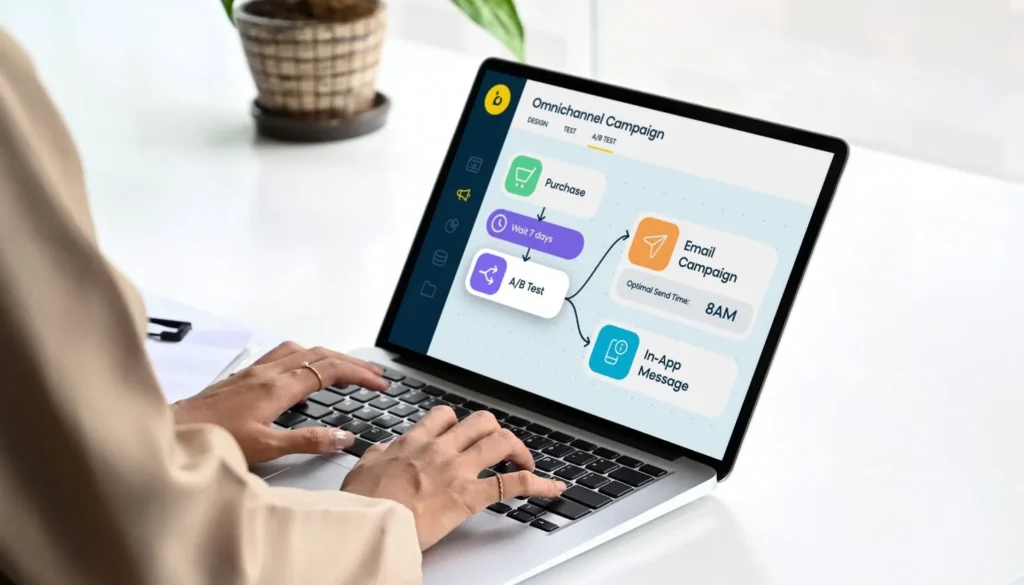
At its core, real-time personalization depends on how quickly and intelligently a system can interpret user signals and respond. Rather than relying on pre-segmented audiences or delayed batch processing, this approach focuses on continuous interpretation.
Event-driven data, not static profiles
Traditional personalization systems often depend on:
- User personas are updated once per day
- Historical behavior averaged over time
- Hard-coded rules tied to broad segments
By contrast, modern personalization engines work with live events—clicks, scrolls, pauses, device context, and interaction timing. These events are processed the moment they occur, allowing the system to adjust what the user sees instantly.
This method prioritizes:
- Context over demographics
- Behavior over assumptions
- Timing over volume
Intent recognition in motion
One of the most important shifts in adaptive systems is the move from behavior tracking to intent recognition. Intent signals are subtle and often temporary, such as:
- Rapid navigation indicates confusion
- Repeated hovering suggests hesitation
- Sudden path changes imply a new goal
Instead of storing all data permanently, intent-aware systems evaluate relevance in the moment. This reduces noise and keeps personalization helpful rather than intrusive.
Decision layers that adapt continuously
Real-time personalization works because decisions are layered:
- Signal intake – live user interactions
- Context evaluation – device, location, session state
- Decision logic – what change improves relevance now
- Instant delivery – UI, content, or workflow adapts
This layered approach allows systems to respond in milliseconds without overwhelming infrastructure.
Core System Components Behind Rapelusr

To support real-time adaptation, the underlying architecture must be flexible, modular, and resilient. Monolithic systems struggle here because every change increases latency. Modern personalization platforms rely on several key components.
Modular services instead of monoliths
Breaking functionality into independent services allows:
- Faster updates without downtime
- Targeted scaling under heavy load
- Easier experimentation and rollback
Each service handles a specific responsibility, such as data intake, decision logic, or experience delivery.
Low-latency data pipelines
Speed is non-negotiable. Data pipelines must:
- Process events in near real time
- Avoid unnecessary storage delays
- Prioritize relevance over completeness
Technologies such as streaming processors and in-memory evaluation play a critical role here, ensuring that personalization decisions are made before the moment passes.
Rules, models, and hybrid logic
Effective systems don’t rely on a single decision method. Instead, they combine:
- Lightweight rules for predictable scenarios
- Machine learning models for pattern recognition
- Fallback logic to ensure stability
This hybrid approach keeps personalization accurate without making it fragile.
Practical Use Cases in Modern Products

Real-time personalization isn’t limited to content feeds. It shows up across the product experience in subtle but powerful ways.
Adaptive onboarding flows
Instead of forcing every user through the same steps:
- Fast learners skip explanations
- Hesitant users receive guidance
- Returning users see shortcuts
This reduces drop-off and increases early engagement.
Context-aware interfaces
Interfaces can adjust based on:
- Device constraints
- Time of day
- Session length
- Current task complexity
These changes don’t feel dramatic, but they reduce friction significantly over time.
Smarter automation triggers
Workflows can adapt automatically when:
- A user stalls at a key step
- An action is repeated unnecessarily
- A process becomes error-prone
Automation triggered by live context is more helpful than automation based on assumptions.
Performance, Trust, and Governance Considerations
Speed and intelligence must be balanced with responsibility. Real-time systems raise legitimate concerns around transparency, privacy, and control.
Data minimization by design
One advantage of intent-based personalization is that it doesn’t require storing everything. Evaluating relevance in the moment allows systems to:
- Discard unnecessary data
- Reduce long-term storage risk
- Improve compliance with privacy standards
Guidance from trusted organizations like the National Institute of Standards and Technology reinforces the importance of privacy-first system design in adaptive technologies: https://www.nist.gov
Explainability and user trust
Users are more likely to accept personalization when:
- Changes feel logical
- Outcomes are predictable
- Controls are visible
Clear feedback loops help prevent personalization from feeling “creepy” or manipulative.
Scaling Personalization Without Losing Control
As products grow, personalization must scale without becoming chaotic.
Guardrails over hard rules
Instead of rigid logic, scalable systems use guardrails:
- Maximum change thresholds
- Performance budgets
- Experience consistency checks
These guardrails allow flexibility while protecting usability.
Continuous evaluation
Successful teams treat personalization as a living system:
- Measure outcomes, not just engagement
- Test assumptions regularly
- Roll back when impact declines
This mindset keeps personalization aligned with real user value.
FAQs
Is real-time personalization the same as AI-driven personalization?
Not always. Real-time systems may use AI, but timing and context matter more than model complexity.
Does personalization increase infrastructure costs?
It can, but modular and event-driven architectures help control costs by scaling only what’s needed.
Can smaller teams implement adaptive systems?
Yes. Starting with simple intent signals and clear guardrails makes adoption manageable.
Conclusion
Real-time personalization succeeds when it respects user intent, responds quickly, and remains transparent. By focusing on live signals, modular architecture, and responsible governance, teams can deliver adaptive experiences that genuinely help users rather than overwhelm them—start evaluating where real-time relevance could remove friction in your own product today.